Deer Park is a small, tightly knit community where homes have been in families for decades — and where a roof that fails affects more than just the building. Parker Roofing brings honest assessments, quality workmanship, and a contractor relationship you can trust to every job in Deer Park.
Deer Park, OH
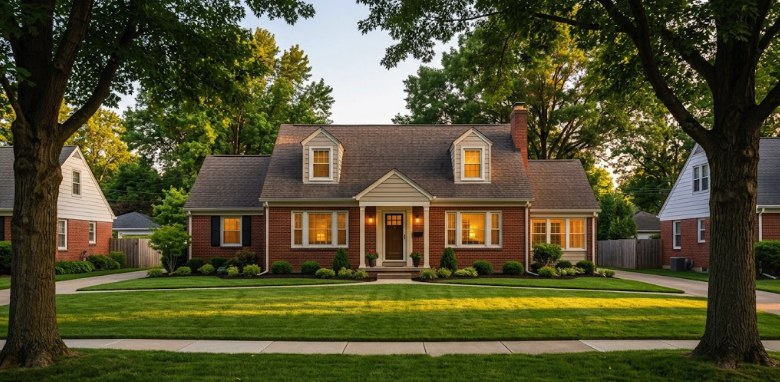
Deer Park is one of Hamilton County's smaller incorporated cities — just under two square miles — but it packs a significant amount of housing history into that footprint. The majority of Deer Park's homes were built between the 1930s and the 1960s, making it one of the older residential communities on the east side of Cincinnati. Brick bungalows, two-story frame colonials, and solid post-war ranches line the streets — homes with character, homes that have been maintained carefully by owners who know what they have.
That age profile means roofing in Deer Park is not a simple commodity service. Homes from this era have structural details — shallow-pitch sections over rear additions, original brick chimneys with decades of freeze-thaw exposure, wood fascia boards that absorb moisture over time — that require a contractor who pays attention and communicates clearly. A quick patch that looks fine in April can fail by November. We don't work that way.
Parker Roofing has served the east-side Hamilton County corridor — including Deer Park and its immediate neighbors — since 2014. We know the housing stock here. Mike and Tonia Parker run the business personally, our estimators give you clear and honest answers, and every project is completed by experienced crews who've worked with Parker Roofing for years — all carrying our 5-year workmanship warranty because we're accountable for every detail of the installation.
What We Do
Full residential and commercial roofing services for Deer Park — from a single repair on a 1940s bungalow to a complete re-roof on a post-war colonial, handled with care and backed by a warranty.
Deer Park's older homes develop repair needs that require careful diagnosis — flashing that has lifted away from brick, shingles that have lost adhesion on lower-pitch sections, valleys that have held water for years without anyone noticing.
Get Roof Repair HelpMany Deer Park homes are on their second or even third roofing system. When it's time to replace, we assess the deck condition underneath, address any ventilation issues, and complete the installation properly so the next system lasts as long as it should.
Request a Replacement QuoteEast Hamilton County sees its share of hail and high-wind events. Older Deer Park roofs with age-compromised shingles are more vulnerable than newer material — we assess damage honestly and help you understand what's actually claim-worthy.
Get Storm Damage HelpOriginal or long-outdated gutters on Deer Park's older homes frequently have undersizing, improper pitch, or pulled-away sections that send water behind the fascia. We replace with properly-sized seamless gutters and assess fascia condition as part of every job.
Request Gutter ServiceBrick chimneys are nearly universal in Deer Park's older housing stock. After 60-plus years of Ohio weather, mortar joints crack, crowns fail, and flashing separates — letting water in at exactly the point where it does the most damage. We diagnose and repair correctly.
Schedule Chimney RepairDeer Park's small commercial corridor along Montgomery Road includes flat and low-slope roofing systems we service, repair, and replace for business owners and property managers in the area.
Learn About CommercialWhy Parker Roofing
A 1940s brick bungalow in Deer Park isn't just a building — it's a property someone has maintained for decades, often through generations of the same family. We work on these homes with that in mind: carefully, without shortcuts, and with an eye toward solutions that preserve what makes them worth keeping.
On older Deer Park homes, the condition of the roof deck beneath the shingles matters as much as what's on top of it. We assess decking during every replacement and repair project — and if we find soft spots, rot, or compromised sheathing, we stop and discuss it with you before we proceed.
Older homes sometimes reveal more than expected once the work begins. We don't spring costs on homeowners mid-project, but we do offer financing that makes a larger scope manageable when the right answer turns out to be more comprehensive than the original estimate.
Our warranty covers the installation itself — not just the materials. If anything related to our workmanship fails within five years, we come back and make it right. That accountability matters more on an older home than on a new one, and we know it.
Deer Park's housing stock is consistently old — most of what we work on here was built between 1935 and 1965. That means we're regularly dealing with roofing systems installed two or three generations ago, on structures where the original wood decking has cycled through decades of Ohio winters, and where chimney stacks have been absorbing freeze-thaw stress since Eisenhower was president.
One thing we see very consistently in Deer Park: brick-to-shingle flashing failures. The older homes here have chimneys and wall interfaces where the original flashing — often lead or aluminum — has corroded, lifted, or simply reached the end of its functional life. This is one of the most common sources of water intrusion in homes of this age, and it's also one of the most misdiagnosed. Water entering at a chimney base can travel several feet along a rafter before appearing as a stain on a ceiling — nowhere near the chimney. We trace the source, not just the symptom.
We also see a lot of rear addition rooflines in Deer Park — the low-slope sections added when families expanded their homes in the 1950s and 60s. These lower-pitch areas require different installation details than the main roof slope, and they're the first place problems develop when those details aren't followed. If your Deer Park home has a rear addition, that section of the roof should be the first thing we look at during an inspection.
Schedule a Free InspectionIn a neighborhood where nearly every home has a brick chimney and most of those chimneys are 60-plus years old, flashing failure is the single most common roofing issue we diagnose. Original lead, aluminum, or tar-based flashing systems from the mid-20th century don't last forever — and when they fail, the water damage they cause is often attributed to the wrong source. If your Deer Park home has had ceiling stains near interior walls or around the fireplace, the chimney flashing is the first place we look.
Many Deer Park homes were expanded with rear additions during the postwar housing boom, adding low-slope or flat roofline sections that connect to the original steeper-pitch main roof. That connection point — where two different roof planes meet at different pitches — is a known problem area. Without proper flashing detail and ice-and-water shield coverage at the transition, these sections can hold water and leak for years before anyone traces the source. We inspect every transition carefully and explain what we find.
Deer Park is the kind of community where people have lived for a long time and know their neighbors. A contractor who does good work in Deer Park hears about it from the neighbors they helped — and one who cuts corners hears about that too. We've built our reputation across east Hamilton County by working the way we'd want a contractor to work on our own homes, and Deer Park is no different.
Homes this age benefit from a thorough look every few years. The inspection is free and there's no obligation attached to the information.
Homes from the 1930s–50s era typically have original board sheathing rather than modern plywood or OSB decking. That's not inherently a problem, but it does mean we need to assess the board condition before installing new shingles — looking for rot, soft spots, gaps between boards, and whether the overall structure can support new material weight and fastener hold. We inspect the decking as part of the project and discuss what we find before proceeding. If boards need replacement, we address them as part of the scope rather than roofing over a problem. We also check ventilation on older homes, because inadequate attic ventilation is one of the leading causes of premature shingle failure and we want your new roof to last as long as it's rated to.
Water in a roof assembly travels along decking, rafters, or insulation before finding a gap to enter the living space — sometimes traveling six to ten feet from the actual breach point. Interior wall stains on Deer Park homes are commonly caused by chimney flashing failures, particularly at the step and counter flashing where the chimney meets the roof plane. They can also originate from valley flashing failures or wall-to-roof intersections on homes with rear additions. We trace the water path systematically during inspection rather than assuming the breach is directly above the stain. This is one of the most common misdiagnoses in older homes, and getting it wrong means the repair fails again in the next rain.
Chimney repair on an older Deer Park home typically involves one or more of the following: re-flashing the chimney where it meets the roof (step flashing and counter flashing replacement), repointing deteriorated mortar joints in the chimney stack itself, repairing or replacing a failed crown (the concrete cap at the top of the chimney), and occasionally addressing deteriorated brick faces. We assess all of these during inspection and quote what's actually needed — not a blanket "chimney restoration" scope that includes work your chimney doesn't require. If the chimney is sound except for the flashing, that's what we fix. If the crown is cracked and allowing water into the flue, we address that specifically.
Usually a roofing problem — specifically an installation detail problem at the transition between the low-slope section and the main roof. The connection between two roof planes at different pitches requires precise flashing, correct ice-and-water shield coverage extending well up the main roof slope, and proper shingle lap dimensions on the low-slope section itself. When any of these details are inadequate, the section holds water and ice-dams form in winter, pushing water back under the shingles. This is a repairable condition in most cases — we assess what's there, explain what needs to change, and give you a specific scope rather than telling you the whole roof needs to come off.
The key factors are: how much of the roof's expected lifespan has been used, whether there's underlying damage to the decking or structure, and how much life a targeted repair would realistically add. If your roof is 25 years old, shows widespread granule loss and shingle curling, and has had two or three repair cycles already, additional repairs are often money that delays an inevitable replacement without extending the roof's life meaningfully. If the roof is 15 years old with isolated storm damage on a section that's otherwise sound, repair is almost always the right call. We give you our honest read on both options — including what we'd do on our own homes — and let you decide with complete information.
Yes. Roofing work on older homes can sometimes involve more scope than anticipated — deck repairs, fascia replacement, additional flashing work — and we want homeowners to be able to make the right decision for their home rather than the minimum decision their budget forces. Financing options are available; ask us when you request your estimate and we'll walk through what's available for your project size and timeline.
Every project is backed by our workmanship warranty — on top of any manufacturer material coverage. We stand behind the quality of our work.
What Homeowners Say
"We had a ceiling stain that two contractors told us was a plumbing issue. Parker came out and traced it to failed chimney flashing — water was traveling eight feet along a rafter before entering the living space. Fixed properly, no stain since. That's the diagnosis experience you need on an older home."
Barbara T. — Hamilton County, OH
"Full replacement on our 1952 home. They found several rotted deck boards during tear-off, called me before doing anything, explained exactly what needed replacing and why, and finished on budget with no surprises. The house has never had a dry roof like this one. Worth every dollar."
Frank D. — Cincinnati, OH
"Our rear addition had leaked every winter for four years. Parker identified a flashing gap at the transition between the addition and the main roof — not the shingles, not the valley, exactly where the two slopes meet. Fixed it in a half day. No leak this past winter for the first time in years."
Helen M. — Greater Cincinnati
Request a free inspection or call us directly. Honest answers, experienced diagnosis, and workmanship we stand behind — for every home in Deer Park, regardless of its age.