The good news: you do not have to figure everything out at once.
If you need storm damage roof repair in Cincinnati, start with these seven steps. They will help you protect your home, preserve useful evidence, and make the insurance process easier.
1. Put safety ahead of the roof
Wait until the storm has completely passed before going outside. Watch for downed power lines, broken branches, standing water, unstable structures, and damaged chimneys.
Assume every downed power line is live. Keep children and pets away, and contact the utility company or emergency services if there is immediate danger. The City of Cincinnati also provides severe weather and power outage safety guidance.
Do not climb onto your roof. Wet shingles are slippery, and storm damage can make the roof surface unstable. You do not need to walk the roof to start a claim or document what happened.
If water is near outlets, light fixtures, or your electrical panel, stay clear of the area. Contact a qualified professional if you are unsure what to do safely.
Your first job is simple: keep people safe.
2. Check inside for signs of a leak
You may not see roof damage from the ground, but your home may show you where water is getting in.
Walk through the upper floors and look for:
- Brown or yellow ceiling stains
- Bubbling or peeling paint
- Damp drywall or insulation
- Active drips
- Wet flooring or carpet
- Water around chimneys, skylights, vents, or exterior walls
- Sagging ceilings or unusual creaking sounds
Place a bucket under an active drip and move furniture, electronics, and other valuables away from the water. If a ceiling is sagging, do not press on it or stand directly underneath it.
Take photos before cleaning or moving damaged materials whenever possible. A photo of the original condition can help show the adjuster what happened.
If the attic appears safe and accessible, look for wet insulation, dark marks on the roof decking, or daylight through a new opening. If the structure looks unstable, skip the attic and wait for a professional inspection.
3. Inspect the exterior from the ground
From the driveway, yard, or another safe location, use your phone’s zoom function or binoculars to look for obvious damage.
Check for:
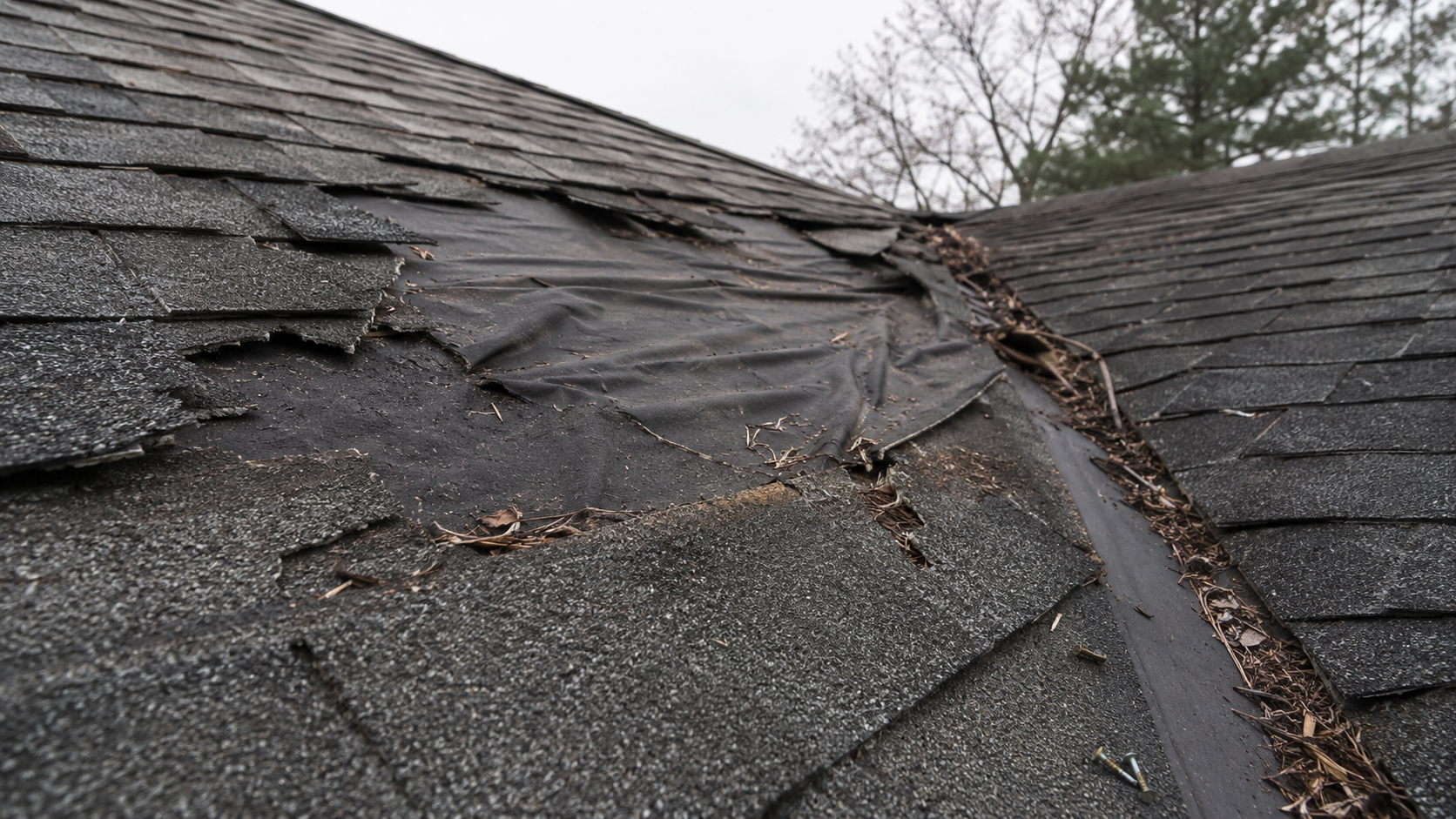
- Missing, cracked, curled, or lifted shingles
- Shingles or roofing pieces in the yard
- Dented gutters and downspouts
- Loose fascia, soffit, or siding
- Damaged vents or flashing
- Fallen limbs resting on the roof
- Debris near valleys and roof edges
- Granules collecting around downspouts
Pay close attention to gutters. Dents or separations can be signs that hail or wind affected the roof system as well.
Also check the ground around the house. Shingle pieces, metal fragments, broken trim, and branches can help show the storm’s impact. Photograph those items where you found them before throwing anything away.
You may see only a few missing shingles. That does not necessarily mean the damage is limited. Wind-lifted shingles, cracked flashing, and hail impacts can be difficult to identify without getting closer.
That is one reason a professional inspection matters.
4. Document everything before cleanup
Strong documentation gives you a clearer record of the loss. It also gives your insurance company and roofing contractor something concrete to review.
Start with wide photos of:
- The front, back, and sides of your home
- Each visible roof slope
- The yard and surrounding property
- Fallen trees or branches
- Nearby structures that were damaged
Then take closer photos of missing shingles, dented metal, damaged gutters, broken flashing, siding damage, and interior stains. Use a coin or ruler next to hail marks when possible to show their size.
A short video walkthrough can help, too. Talk through what you are seeing and identify the location. For example: “Water stain on the second-floor ceiling near the chimney,” or “Missing shingles on the rear roof slope above the garage.”
Create a simple storm log that includes:
- The date and approximate time of the storm
- Whether you noticed wind, hail, heavy rain, or all three
- When you first saw the damage
- Locations of leaks or visible damage
- Temporary steps you took
- Names and dates of conversations with contractors or insurance representatives
Save screenshots of local storm alerts, radar, or news coverage if you have them. You can also review local resources from the National Weather Service Cincinnati office for severe weather information.
Do not delete photos simply because they seem repetitive. The full set may help establish the extent and location of the damage.
5. Make temporary repairs: but not permanent ones
After you document the damage, take reasonable steps to prevent it from getting worse.
Inside the house, you can:
- Place containers under active leaks
- Move belongings away from wet areas
- Cover furniture and flooring with plastic sheeting
- Use towels to contain small amounts of water
For exterior damage, professional emergency tarping is usually safer than trying to climb a wet or steep roof yourself. If a window is broken, cover it only from a safe position.
Keep every receipt for tarps, boards, emergency labor, drying equipment, or other mitigation work. Your insurance policy may cover reasonable temporary measures, but coverage varies by policy.
Avoid permanent repairs before the insurance adjuster has had a chance to inspect the damage unless your insurer gives you specific instructions. Replacing the roof, discarding damaged materials, or repairing every affected area too early can make it harder to document the original condition.
Temporary protection is appropriate. Permanent restoration can wait until the damage is properly reviewed.
Schedule a free storm damage inspection
No cost, no obligation, and no pressure to buy anything. We inspect, photograph, and explain what we find.
6. Schedule a professional roof inspection
A roof can look intact from the ground and still have storm damage. Hail can bruise shingles without creating an obvious hole. Wind can lift edges and break seals. Water can enter around flashing at chimneys, vents, and skylights.
A qualified local roofer can inspect the full roof system and look for problems you may miss. Ask for a written report with photos and a clear explanation of whether the damage appears repairable or whether replacement makes more sense.
Parker Roofing provides a free storm damage inspection throughout Greater Cincinnati. We inspect the roof, gutters, flashing, soffit, fascia, and other affected areas. We also document what we find for your records and insurance claim.
Our typical storm process includes:
- Scheduling an inspection, often within 24–48 hours
- Identifying visible and hidden storm damage
- Providing detailed photos and written documentation
- Installing emergency tarping for active leaks when needed
- Coordinating with your insurance adjuster
- Completing approved repairs or replacement
- Reviewing the finished work with you
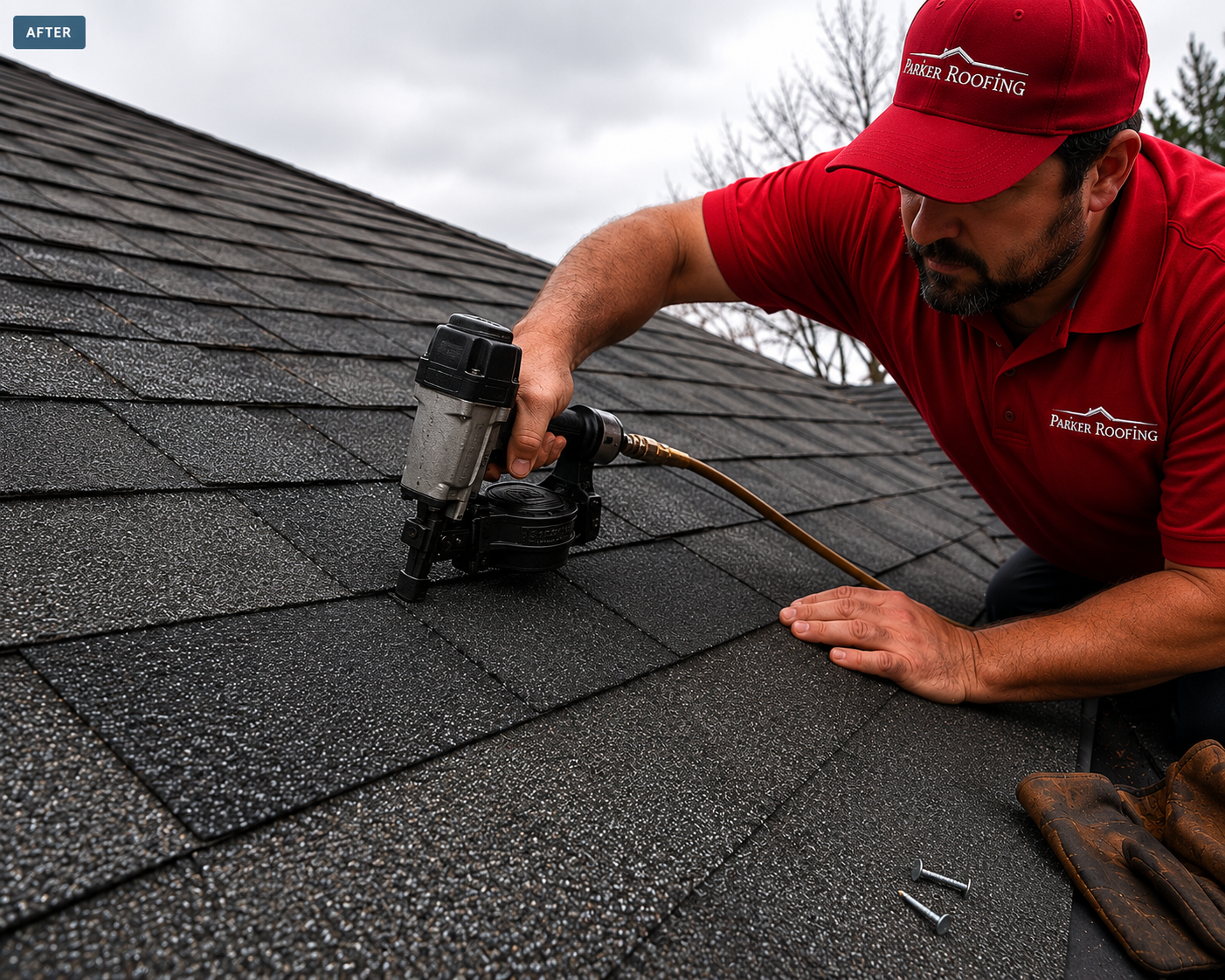
A reputable contractor should explain what they see without pushing you toward work your home does not need. At Parker Roofing, we give you a straight repair-versus-replace recommendation. No pressure. No surprises.
7. Call your insurance company with your information ready
Once you have handled safety, documented the damage, and arranged an inspection, contact your insurance company promptly. Most policies require you to report losses within a certain timeframe, and your carrier can explain the steps specific to your policy.
Have these details ready:
- Your policy number
- The storm date and approximate time
- A brief description of the damage
- Photos and videos
- Your contractor’s inspection report, if available
- Receipts for temporary repairs
- The location of interior leaks or stains
Ask for a claim number and the adjuster’s contact information. It is also reasonable to ask what your policy says about emergency mitigation, roof coverage, depreciation, and your deductible.
You do not have to handle the process alone. Parker Roofing provides full insurance claim support and adjuster coordination. We can share our documentation, answer questions about the roof’s condition, and communicate with the adjuster when needed.
We cannot decide what your policy covers, and no contractor should promise a specific insurance outcome. But we can make sure the damage is clearly documented and that you understand what happens next.

Need emergency roof leak repair in Cincinnati?
If water is actively entering your home, do not wait for the next storm to see what happens. Call Parker Roofing at 513-729-2770. We provide same-day service on most repairs and can often install emergency tarping to help contain an active leak while the full assessment is completed.
We are family and veteran-owned, rooted in Greater Cincinnati since 2014: not a storm-chasing franchise that disappears when the season ends. Our BBB A+ accreditation, local reputation, and 5-year workmanship warranty reflect how we approach every job: show up, communicate clearly, do the work properly, and stand behind it.

A free inspection is a good next step
You do not need to know whether you need a repair or a full replacement before calling. You do not need to understand insurance estimating software. And you do not need to make a decision while you are still trying to find the bucket for the ceiling leak.
Start with a free inspection and a clear explanation of what we find.
Schedule your free storm damage inspection or contact Parker Roofing with your questions. We will inspect the damage, explain your options, and help you move forward without pressure.